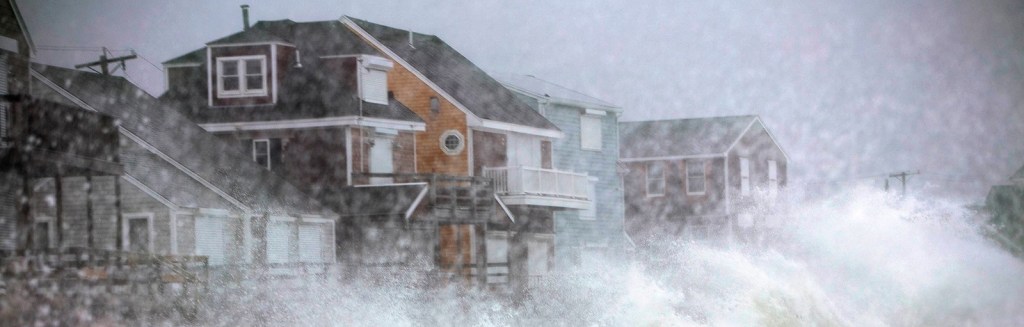
‘Avoiding dangerous climate change is impossible. Dangerous climate change is already here. The question is, can we avoid catastrophic climate change?’
Sir David King, then the UK Government’s Chief Scientific Adviser, in 2007
New scholarship on the systemic environmental risks we face is published frequently. Follow us on Twitter to stay abreast of evidence and responses. Here we explain how the Cadence Roundtable engages the evidence.
Working for the best, planning for the worst
“Our understanding of Climate Tipping Points has changed significantly over the last couple of decades… Now, however, we know that critical components of the climate system could tip following a hike in global temperature of little more than 1°C.“
Prof Bill McGuire, Responsible Science Journal, 7th December 2024
Under a high emissions scenario, the Met Office projects temperatures in the UK to rise 3.7-6.8C by 2070 (UKCP18). The Committee on Climate Change (CCC) has warned the government to prepare for global warming of 4C, a rise which many scientists consider incompatible with our current civilisation.
Indeed there is now evidence that positive feedbacks are being activated, for instance in wildfires and the retreat of polar ice, potentially unleashing a cascade of tipping points in the Earth system.
Building collective capacity
“The previous Government signalled a slowing of pace and reversed or delayed key policies. The new Government will have to act fast to hit the country’s commitments. Recently, we’ve seen the wettest 18 months on record in England. Thousands of acres of farmland have been submerged for extended periods, leading to the loss of crops and animals. The impact of this is expected to be felt well into 2025.”
CCC – 2024 Progress Report to Parliament
The CCC assesses 33 domestic climate risks, encompassing sea-level rise, drought and flood and overheating, impacts on nature, pests and diseases, economic shocks, interruptions to food supply and global disruption affecting national interests. Its 2019 progress report found that 12 of them – more than a third – lacked any long-term plans, and none of the four sectors where vulnerability or exposure should be addressed (the natural environment, infrastructure, health and built environment, or business) were showing good progress.
The work is demanding, not least emotionally. It is not something we can do alone.
Catalysing post-normal policy making
“No sectors are yet well adapted to the risks of climate change. While some – often quite basic – consideration of climate change within relevant plans is becoming more prevalent, evidence of tangible progress in reducing exposure and vulnerability to climate change is lacking across the board.“
CCC, Progress in adapting to climate change, 2023 Report to Parliament.
Even while we pursue a net-zero future, it is now also critical to plan for the consequences of past delay. And climate change is not the only dimension of environmental breakdown. Human well-being depends on the health of numerous natural systems, including soil, biodiversity and the oceans. All are now under unsustainable levels of stress and can no longer be taken for granted.
Our civilisation is under threat from complex and cascading environmental breakdown. This systemic existential risk dismantles many of the certainties and assumptions on which our society is founded. It profoundly challenges the culture, processes and standards to which organisations work and policy is made.
Thinking globally, preparing locally
“In IPCC we have been saying for more than five years now that only immediate and deep emission reductions will allow global warming to be limited to 1.5°C. We can’t go on saying that forever. Indeed, the last UNEP Gap Report was entitled ‘broken record‘.”
Jim Skea, IPCC, Copenhagen Climate Ministerial, 21st March 2024.
Governments both national and local face new responsibilities in this age of uncertainty: in economic well-being, financial stability, energy resilience, food and water security, health, foreign and migration policy, humanitarian aid; and even in reconceiving socio-economic systems to forestall collapse.
It is time to prepare for a very different Britain in a very different world, and to engage the public in those preparations. If you feel ready for it, let’s act together, and let’s ensure that our organisations and networks take up the challenge. We are here for each other.
 Cadence Roundtable